
Contents
Overview
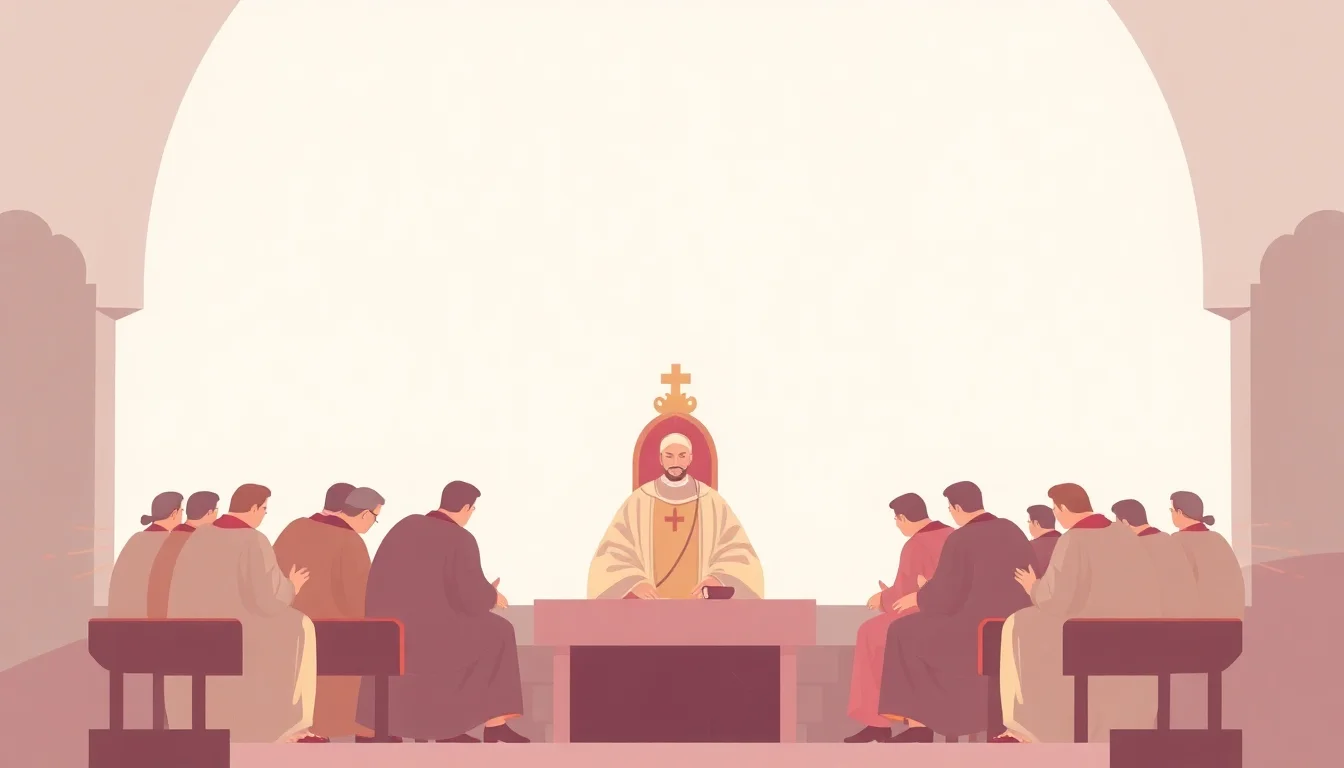
The episcopacy, as a distinct office of church governance, emerged from the early Christian communities. While the New Testament offers glimpses of early leadership structures, the formalization of the bishop's role as a singular overseer of a city and its surrounding region solidified over time, notably documented in the writings of Ignatius of Antioch around 110 CE. These early bishops were often seen as direct spiritual descendants of the Apostles, claiming apostolic succession—a continuous line of ordination tracing back to the original twelve disciples of Jesus Christ. This claim became a foundational element for the developing Catholic Church and later for the Eastern Orthodox Church and Anglican Communion. The episcopacy's structure was not monolithic; early variations existed, but the monarchical bishop, presiding over a local church, became the dominant model by the 3rd century, often supported by presbyters and deacons.
⚙️ How It Works
At its functional core, the episcopacy operates through a hierarchical structure where bishops hold ultimate authority within their designated geographical area, known as a diocese or eparchy. Bishops are responsible for ensuring the purity of doctrine, the proper administration of sacraments, and the spiritual well-being of their flock. They possess the unique authority to ordain deacons, priests, and other bishops, thereby perpetuating the historic episcopate. In many traditions, bishops also serve as chief administrators, managing church property, finances, and personnel within their jurisdiction. The collective body of bishops, often meeting in ecumenical councils or synods, can also shape broader church policy and theological pronouncements, as seen in the Council of Nicaea in 325 CE.
📊 Key Facts & Numbers
Globally, approximately 1.3 billion Roman Catholics adhere to an episcopal structure, with over 5,000 active Catholic bishops worldwide as of 2023. The Anglican Communion comprises over 85 million members across 44 provinces, all of whom recognize the Archbishop of Canterbury as a symbolic head, with thousands of bishops governing their respective dioceses. The Eastern Orthodox Church has around 250 million adherents and a complex network of autocephalous churches, each led by bishops. In contrast, denominations like the Presbyterian Church (USA) and the United Methodist Church (though the latter retains some episcopal elements) have significantly fewer or no bishops, with congregational or presbyterian models governing their approximately 10 million and 12 million members respectively. The cost of maintaining a large episcopal hierarchy can be substantial, with diocesan budgets often running into millions of dollars annually.
👥 Key People & Organizations
Key figures in the development and defense of the episcopacy include Ignatius of Antioch, whose letters are among the earliest defenses of the monarchical bishop. Cyprian of Carthage (c. 200-258 CE) further articulated the bishop's role as a visible symbol of church unity. During the English Reformation, figures like Thomas Cranmer were instrumental in shaping the Anglican episcopacy. In modern times, theologians like Rowan Williams have written extensively on its theological significance. Organizations such as the Roman Catholic Church itself, the Anglican Communion, and the Eastern Orthodox Church are the primary institutional embodiments of the episcopacy, each with their own synods, conferences, and governing bodies like the Conference of Bishops.
🌍 Cultural Impact & Influence
The episcopacy has profoundly shaped Western civilization, often intertwining with political power structures throughout history. Medieval bishops frequently held significant temporal authority, acting as feudal lords and advisors to monarchs, as exemplified by figures like Thomas Becket. The episcopacy also influenced the development of canon law, a comprehensive legal system governing church affairs that has, in turn, impacted secular legal traditions. Architecturally, cathedrals, the seat of bishops, stand as monumental testaments to the faith and the power wielded by these ecclesiastical leaders, influencing urban development and artistic expression for centuries. The very concept of ordained leadership and hierarchical authority in many Western institutions can trace some lineage back to the models established by the episcopacy.
⚡ Current State & Latest Developments
In the early 21st century, the episcopacy remains a vibrant, albeit debated, structure within major Christian traditions. The Roman Catholic Church continues to appoint thousands of bishops globally, with recent appointments often reflecting geopolitical shifts and theological emphases. The Anglican Communion grapples with internal divisions, particularly concerning the ordination of women and LGBTQ+ individuals as bishops, a debate that has led to significant schisms and the formation of alternative Anglican bodies. The Eastern Orthodox Church maintains its ancient episcopal traditions, though inter-Orthodox relations can be complex. Ecumenical dialogues between episcopal and non-episcopal churches, such as those between Catholics and Lutherans, often focus on the nature of ministry and the role of bishops.
🤔 Controversies & Debates
The episcopacy is a lightning rod for controversy, primarily centered on its claims of divine authority and its hierarchical nature. Critics, particularly from Protestant traditions like Calvinism and Baptism, argue that the episcopacy is a human invention, not explicitly mandated in scripture, and that it fosters clericalism and an unbiblical concentration of power. The concept of apostolic succession is also contested, with many arguing that its historical continuity is unprovable or that spiritual authority is not dependent on such a lineage. Furthermore, the historical entanglement of bishops with secular power has led to accusations of corruption and a departure from the humble servant-leadership modeled by Jesus Christ. The exclusion of women from episcopal ordination in the Roman Catholic Church and Eastern Orthodox Church remains a significant point of contention and a barrier to full communion with many Protestant denominations.
🔮 Future Outlook & Predictions
The future of the episcopacy will likely be shaped by ongoing ecumenical efforts and internal denominational dynamics. As Christian communities engage in deeper dialogue, the role and validity of the episcopacy may be re-evaluated, potentially leading to new models of shared ministry or mutual recognition. Within traditions that retain the episcopacy, the ordination of women and LGBTQ+ individuals will continue to be a major fault line, potentially leading to further fragmentation or, conversely, to greater inclusivity. The increasing globalization of Christianity may also see the episcopacy adapt to diverse cultural contexts, perhaps with less emphasis on historical European models and more on indigenous expressions of episcopal leadership. The ongoing debate over the episcopacy's necessity for church unity will undoubtedly persist, influencing the trajectory of Christian ecclesiology for decades to come.
💡 Practical Applications
The episcopacy's practical applications extend beyond mere church governance. In many denominations, bishops are responsible for establishing and overseeing educational institutions, hospitals, and charitable organizations, impacting public services and social welfare. The Anglican Communion, for instance, operates a vast network of schools and healthcare facilitie
Key Facts
- Category
- philosophy
- Type
- topic