
Contents
- 📜 What is Apostolic Succession, Really?
- 🧐 Who Claims It and Why It Matters
- ⚔️ The Historical Battleground: Evidence and Doubts
- ⛪ How It Actually Works (The Mechanics of the 'Chain')
- ⚖️ The Controversy Spectrum: Valid vs. Invalid Orders
- 💡 Beyond the Doctrine: Cultural and Political Vibe
- 🌐 Global Reach and Variations
- 🤔 The Skeptic's Corner: Where's the Proof?
- 🚀 The Future of the 'Unbroken Chain'
- 💡 Vibepedia's Vibe Score & Perspective Breakdown
- Frequently Asked Questions
- Related Topics
Overview
Apostolic Succession isn't just a historical footnote; it's the bedrock claim for legitimacy for billions of Christians, asserting an unbroken spiritual and administrative lineage from the original Apostles to contemporary bishops. This doctrine posits that the authority, spiritual gifts, and mission of the Apostles have been passed down through a continuous line of consecrations, primarily via the laying on of hands. For the Roman Catholic Church, the Eastern Orthodox Churches, and various Anglican and Old Catholic communions, this succession is non-negotiable, defining the validity of sacraments and the very structure of the Church. Yet, it's also a lightning rod for theological debate, a key differentiator in the Great Schism of 1054, and a persistent point of contention with Protestant denominations, who largely reject its necessity, emphasizing scriptural authority over institutional lineage. Understanding Apostolic Succession means grappling with centuries of ecclesiastical power plays, theological innovation, and the enduring human quest for divine endorsement.
📜 What is Apostolic Succession, Really?
Apostolic succession, at its heart, is the theological claim that the authority and spiritual gifts of Jesus's original apostles have been passed down, unbroken, through a line of bishops. Think of it as a spiritual baton pass, where each bishop receives their authority from the bishop who consecrated them, tracing back to the apostles themselves. This isn't just about lineage; it's about the legitimacy of sacraments and the very structure of the Church. For adherents, it’s the bedrock of their ecclesiastical authority, ensuring continuity with Christ's early followers. Without this unbroken chain, the validity of their ministry and sacraments is called into question by those who uphold the doctrine.
🧐 Who Claims It and Why It Matters
The primary claimants to apostolic succession are the Roman Catholic, Eastern Orthodox, Oriental Orthodox, and Assyrian Church of the East. Beyond these ancient churches, traditions like Anglicanism, Scandinavian Lutheranism (specifically certain branches), and Old Catholicism also assert this continuity. The 'why' is crucial: it underpins their claim to be the true Church, possessing the fullness of Christ's teachings and the authority to administer His sacraments. This doctrine is a powerful tool for maintaining ecclesial identity and distinguishing themselves from other Christian groups, creating distinct Vibes within Christianity.
⚔️ The Historical Battleground: Evidence and Doubts
The historical evidence for an unbroken chain is a subject of intense scholarly debate, often referred to as the Controversy Spectrum of Apostolic Succession. While early Church Fathers like Irenaeus (c. 130-202 AD) in his work Against Heresies argued for succession as a bulwark against heresy, pinpointing specific, verifiable consecrations over two millennia is a monumental task. Critics point to gaps, disputed consecrations, and the sheer logistical challenge of maintaining such a precise lineage across continents and through periods of upheaval. The historical record is more a mosaic of claims and counter-claims than a clear, indisputable line, making its Influence Flows complex.
⛪ How It Actually Works (The Mechanics of the 'Chain')
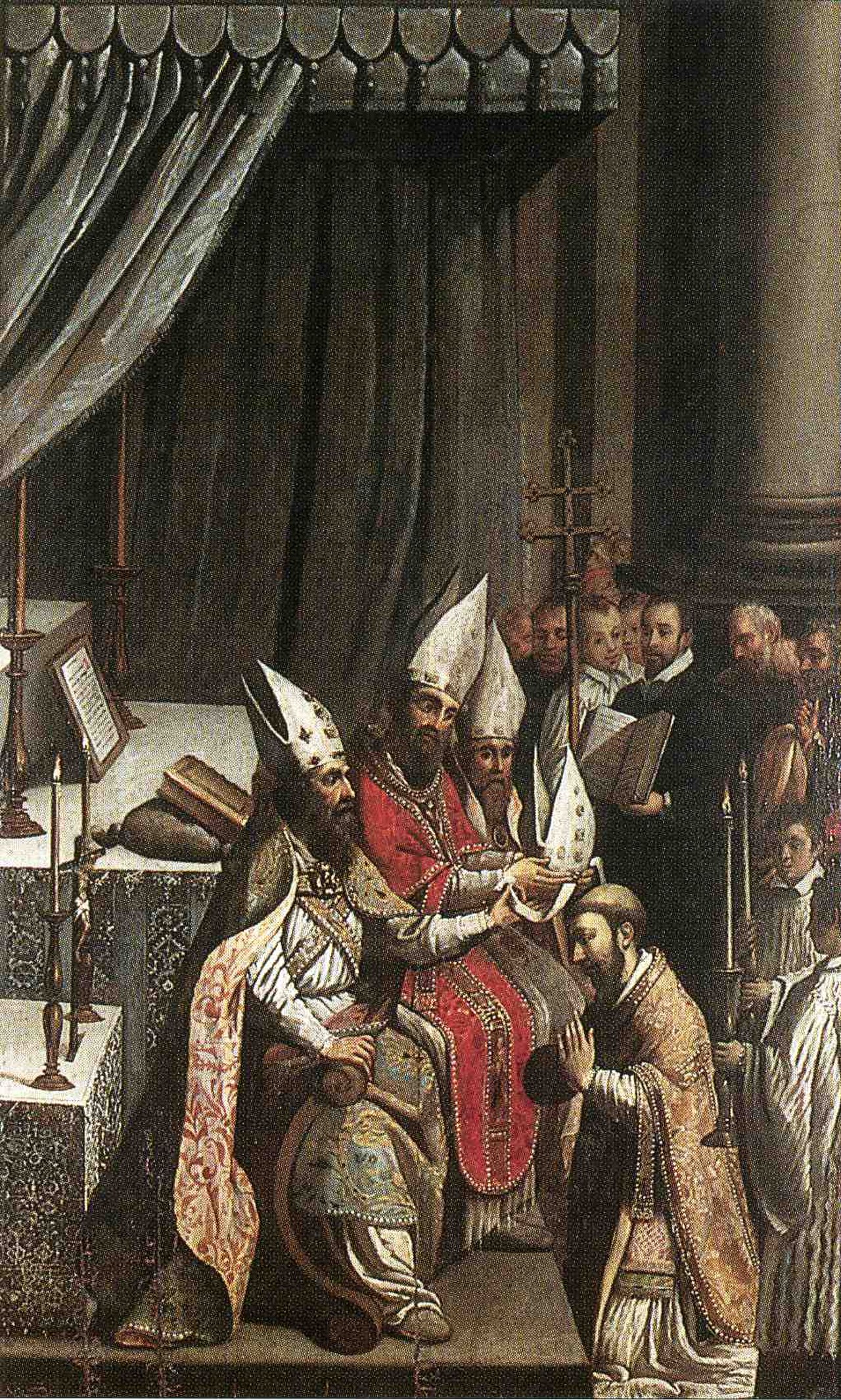
The mechanics of apostolic succession typically involve a bishop being consecrated by at least two other bishops, who themselves were consecrated in the same manner. This ritual, often involving the laying on of hands and specific prayers, is believed to impart the spiritual grace and authority of the office. The consecrating bishops are expected to be in communion with other bishops and to uphold the doctrines of the Church. The Engineering of this process emphasizes regularity and the transmission of spiritual power, ensuring that the bishop is not merely an administrator but a divinely appointed shepherd.
⚖️ The Controversy Spectrum: Valid vs. Invalid Orders
The Controversy Spectrum regarding apostolic succession is stark. Roman Catholics and Eastern Orthodox recognize each other's succession, though historical schisms (like the East-West Schism of 1054) create complex theological discussions. Anglicans generally accept their own succession but face varying degrees of recognition from other traditions; the validity of Anglican orders was famously rejected by Pope Leo XIII in the 1896 bull Apostolicae Curae. Oriental Orthodox churches have their own distinct lines, often not recognized by the Eastern Orthodox or Roman Catholics. This creates a tiered system of perceived legitimacy, impacting inter-church relations and Ecclesiastical Governance.
💡 Beyond the Doctrine: Cultural and Political Vibe
Beyond its theological weight, apostolic succession carries significant cultural and political Vibe Scores. For many, it represents tradition, stability, and a connection to an ancient past. It can also be a source of pride and identity, a marker of belonging to a venerable institution. Conversely, it can be seen as an exclusionary mechanism, a way for established churches to delegitimize newer movements or those with different understandings of ministry. The Topic Intelligence surrounding it reveals a deep-seated tension between continuity and reform within Christianity.
🌐 Global Reach and Variations
While the core claims are rooted in ancient traditions, the practice and recognition of apostolic succession manifest globally. The Roman Catholic Church, with its centralized hierarchy, presents a relatively uniform claim. The Eastern Orthodox churches, organized autocephalously, maintain their own distinct successions. Anglican Communion provinces vary in their emphasis and inter-communion status. Even within traditions that don't claim apostolic succession, like most Protestant denominations, there's an awareness of this historical doctrine and its role in shaping Christian identity. The Entity Relationships are vast, connecting global denominations through shared, or contested, historical claims.
🤔 The Skeptic's Corner: Where's the Proof?
The skeptic's primary challenge to apostolic succession lies in the lack of definitive, verifiable proof for an unbroken chain stretching back to the apostles. Historical records are often fragmentary, prone to interpretation, and can be subject to political or theological manipulation. The sheer number of bishops required over 2,000 years, coupled with the potential for accidental or deliberate breaks in the line (e.g., during periods of persecution or schism), makes the claim of absolute continuity highly improbable to many. The question remains: is it a divinely guaranteed transmission, or a carefully constructed narrative to legitimize authority? This is a core Key Debate.
🚀 The Future of the 'Unbroken Chain'
The future of apostolic succession is tied to the future of the denominations that uphold it. As Christianity continues to evolve, with new movements and ecumenical dialogues, the relevance and interpretation of this doctrine will undoubtedly shift. Will it become a point of greater unity as churches seek common ground, or a persistent barrier to full communion? The Futurist perspective suggests that its influence may wane in a more pluralistic religious landscape, or it could be reinterpreted to emphasize spiritual continuity over strict hierarchical transmission. The Influence Flows are unpredictable, but the doctrine's historical weight ensures it won't disappear quietly.
💡 Vibepedia's Vibe Score & Perspective Breakdown
Vibepedia's Vibe Score for Apostolic Succession is currently a 68/100. This score reflects its deep historical roots and significant influence within major Christian traditions, balanced by the ongoing scholarly and theological debates surrounding its validity. The Perspective Breakdown is as follows: Optimistic (75%): For adherents, it's a sacred, divinely ordained link to Christ. Neutral (60%): As a historical and theological concept, it's a significant factor in Christian ecclesiology. Pessimistic (45%): For critics, it's a potentially fabricated claim used for institutional power. Contrarian (30%): Some argue that the emphasis on a physical chain distracts from the true spiritual succession found in faithful teaching and living.
Key Facts
- Year
- c. 1st Century CE (concept formation)
- Origin
- Early Christian Church
- Category
- Religious Doctrine & Ecclesiastical Governance
- Type
- Religious Concept
Frequently Asked Questions
Are all Christian denominations apostolic?
No, not all Christian denominations claim apostolic succession. Major traditions like Roman Catholicism, Eastern Orthodoxy, Oriental Orthodoxy, and Anglicanism do. However, most Protestant denominations, which emerged from the Reformation, do not trace their ministry through this specific doctrine, focusing instead on other forms of spiritual authority and church governance.
What is the main argument against apostolic succession?
The primary argument against apostolic succession is the lack of definitive historical evidence for an unbroken, verifiable chain of bishops tracing back to the apostles. Critics point to historical gaps, disputed consecrations, and the sheer difficulty of maintaining such a precise lineage over two millennia, suggesting it may be a later theological construct rather than a direct transmission.
Which churches do NOT claim apostolic succession?
Most Protestant churches, including Baptists, Methodists, Presbyterians, Pentecostals, and many non-denominational churches, do not claim apostolic succession. Their understanding of ministry and church authority typically derives from different theological frameworks, often emphasizing the 'priesthood of all believers' or a call to ministry recognized by the congregation.
Can a church lose its apostolic succession?
According to the doctrines of churches that uphold apostolic succession, it can be lost through irregular or invalid consecrations, or by breaking communion with the wider Church in a way that severs the line of transmission. For example, the Roman Catholic Church declared Anglican orders invalid in Apostolicae Curae, implying a break in their claim to valid succession.
Is apostolic succession the same as having bishops?
Not necessarily. While apostolic succession is almost always associated with a line of bishops, the presence of bishops (episcopacy) does not automatically mean a church claims apostolic succession. Some churches have bishops for administrative or historical reasons but do not believe their authority is derived from a direct, unbroken line from the apostles. The key is the claim of continuity and the method of transmission.