
Contents
Overview
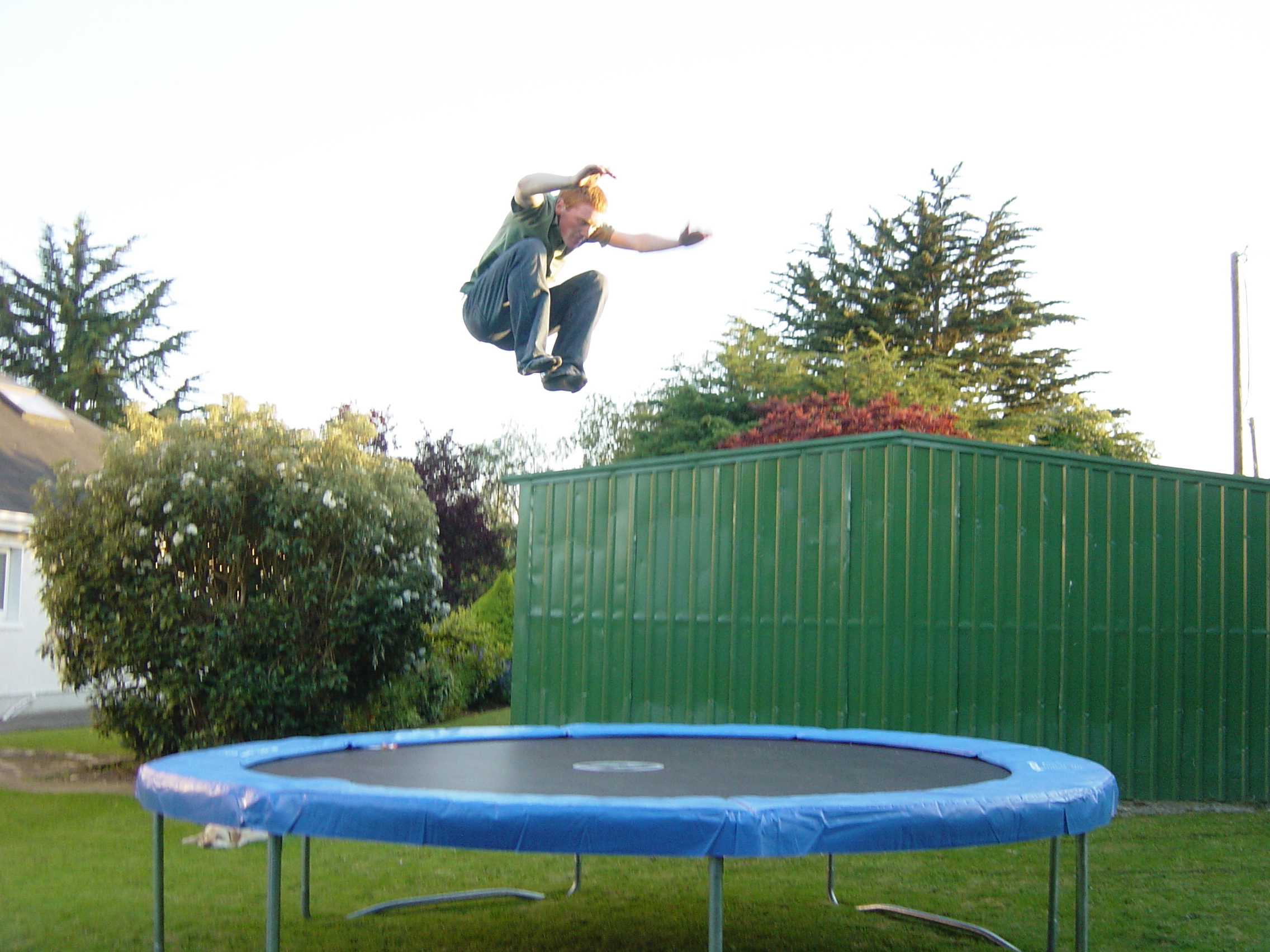
A trampoline is a piece of taut, strong fabric, typically synthetic, stretched over a steel frame by numerous coiled springs. Users generate kinetic energy by bouncing on the fabric mat, which, through the springs, converts this energy into potential energy, propelling them upwards. Originating as a theatrical prop, trampolines have evolved dramatically, finding niches in recreation, fitness, and elite athletic competition. The physics behind its bounce involve principles of energy transfer and elasticity, making it a fascinating intersection of engineering and human movement. Despite its widespread popularity, the trampoline also carries inherent risks, leading to ongoing debates about safety standards and design.
🎵 Origins & History
The trampoline's lineage traces back to early 20th-century circus performers. George Nissen, a gymnast, experimented with adding springs to a canvas stretched on a frame to create a more dynamic rebound. He began manufacturing and marketing his invention, initially as a training tool for gymnasts and divers, and later for recreational use. Early iterations were often referred to as 'bouncing beds' or 'rebounders.' Trampolining has gained significant traction as a competitive sport. The sport's inclusion in the Olympic Games marked a pivotal moment, elevating its global profile and solidifying its status beyond mere novelty.
⚙️ How It Works
The fundamental principle of a trampoline lies in the conversion of kinetic energy into potential energy and back again. When a user jumps on the mat, their downward force stretches the coiled springs attached to the frame. These springs store this energy elastically, much like a compressed rubber band. Upon release, the springs snap back to their original shape, rapidly converting the stored potential energy back into kinetic energy, propelling the user upward. The tautness of the synthetic fabric mat, often made from materials like polypropylene or polyester, also contributes to the rebound by distributing the force evenly across the spring system. The frame, typically constructed from galvanized steel, provides the necessary structural integrity to withstand the repeated stresses of bouncing.
📊 Key Facts & Numbers
Fractures and sprains are the most common trampoline-related injuries. Competitive trampolining events are governed by the Fédération Internationale de Gymnastique (FIG).
👥 Key People & Organizations
George Nissen, the inventor of the modern trampoline, was instrumental in popularizing the device through his performances and manufacturing company, Nissen Trampoline. His early advocacy helped establish trampolining as both a recreational activity and a sport. In competitive trampolining, figures like Tania Ball-Burke (USA) and Alexei Zaitsev (Russia) have been prominent figures in its development and performance. The Olympic Games' adoption of trampoline brought significant attention, with national federations like USA Gymnastics and Gymnastics Great Britain investing heavily in athlete development and training programs. Organizations like the International Trampoline Federation (ITF) (now part of FIG) were crucial in standardizing rules and promoting the sport internationally.
🌍 Cultural Impact & Influence
The trampoline has permeated popular culture, appearing in films, music videos, and as a staple in backyards worldwide. Its association with childhood fun and freedom is undeniable, often evoking a sense of nostalgia and simple joy. Beyond recreation, trampolines have influenced fitness trends, with the rise of 'rebounding' classes and specialized fitness trampolines promising low-impact cardiovascular workouts. In gymnastics, it remains a vital training tool, allowing athletes to practice aerial skills and build core strength. The visual spectacle of high-flying trampolinists has also captured the public imagination, contributing to its enduring appeal in entertainment and sports media.
⚡ Current State & Latest Developments
The sport of trampoline continues to evolve, with athletes pushing the boundaries of aerial acrobatics. Innovations in mat materials and spring technology are constantly being explored to enhance performance and safety. Discussions about potentially including synchronized trampoline or double mini-trampoline events in future Olympic games are ongoing. The FIG is actively working on athlete development programs and expanding the sport's reach into new geographical regions, particularly in Asia and South America. The integration of advanced biomechanical analysis and coaching techniques is also shaping the future of elite trampolining.
🤔 Controversies & Debates
The most persistent controversy surrounding trampolines centers on safety. Despite design improvements, the high incidence of injuries, particularly among children, remains a significant concern. Debates frequently arise regarding the necessity of safety nets, the age at which children should be allowed to use trampolines, and the supervision required. Some critics argue that trampolines are inherently too dangerous for home use and advocate for stricter regulations or outright bans in residential settings. Conversely, proponents emphasize proper usage, safety equipment, and supervision as key to mitigating risks, pointing to the sport's established safety protocols in competitive environments.
🔮 Future Outlook & Predictions
The future of trampolining likely involves a dual trajectory: continued refinement as an elite Olympic sport and further diversification in the fitness and recreational sectors. We might see more sophisticated training technologies, perhaps incorporating virtual reality or augmented reality elements to enhance athlete training and engagement. The development of lighter, more durable, and potentially 'smarter' trampolines with integrated sensors could also emerge, offering real-time feedback on bounce height, form, and energy output. Furthermore, as urban living spaces become more compact, the demand for compact, foldable fitness trampolines is expected to grow, making the bouncing experience more accessible.
💡 Practical Applications
Trampolines serve a variety of practical purposes beyond pure recreation. In gymnastics and diving, they are indispensable training tools for developing aerial awareness, body control, and rotational skills. Specialized fitness trampolines, often smaller and with resistance bands, are widely used in gyms and homes for cardiovascular workouts, lymphatic drainage, and core strengthening. In therapeutic settings, rebound therapy utilizes trampolines for individuals with special needs, promoting motor skills, balance, and sensory integration. They are also sometimes employed in physical rehabilitation programs to aid recovery from injuries by providing a low-impact way to regain strength and coordination.
Key Facts
- Category
- technology
- Type
- product