
Contents
Overview
The Lost World, most famously the 1912 novel by Sir Arthur Conan Doyle, plunges readers into a remote South American plateau where dinosaurs and prehistoric creatures still roam. It's a foundational work in the 'lost world' subgenre, blending adventure, scientific curiosity, and colonial-era attitudes. This isn't just a story; it's an imagined ecosystem, a thought experiment on evolutionary persistence and human intrusion. For fans of dinosaur fiction, exploration narratives, and classic adventure tales, it offers a thrilling, albeit dated, escape.
📜 Origins: Conan Doyle's Vision
Sir Arthur Conan Doyle, already a literary titan thanks to Sherlock Holmes, conceived The Lost World after a conversation with Professor Reginald Daly, a geologist who theorized about isolated landmasses. Doyle, however, wasn't content with mere geological theory; he envisioned a place where evolution had taken a divergent path, preserving creatures long extinct elsewhere. The novel, serialized in The Strand Magazine in 1912, tapped into a public fascination with unexplored territories and the lingering mysteries of natural history, a fascination that had been fueled by figures like Charles Darwin.
🌍 The Setting: A Prehistoric Plateau
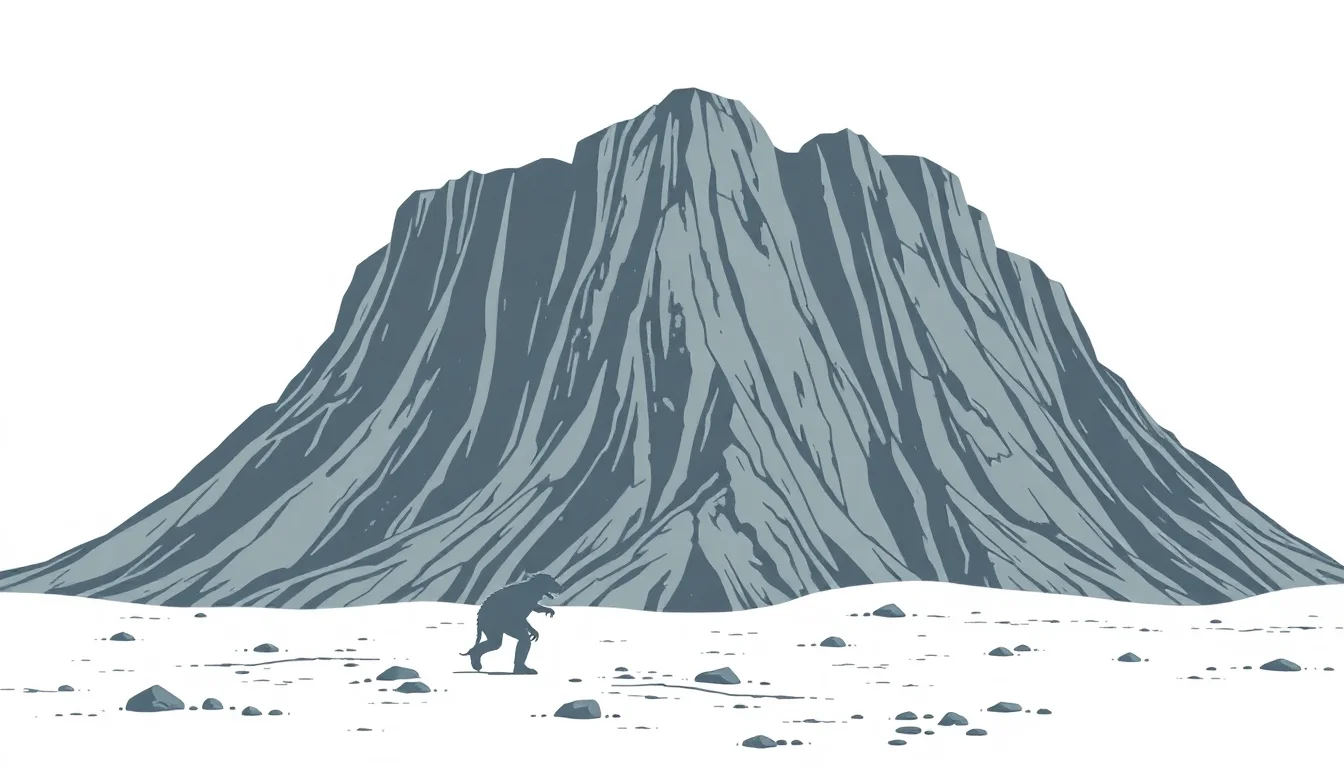
The primary setting is a vast, inaccessible plateau in the Amazon basin, dubbed 'Maple White Land' after one of the expedition's patrons. Towering cliffs, a dense jungle interior, and a unique microclimate conspire to isolate this pocket of prehistoric life. Doyle meticulously describes the flora and fauna, from pterodactyls soaring overhead to formidable allosaurus and iguanodon roaming the plains. This geographical isolation is the engine of the narrative, creating a self-contained world where the rules of modern biology are suspended.
⚔️ Key Characters & Their Quests
The expedition is led by the formidable Professor Challenger, a brilliant but bombastic scientist whose theories are often met with skepticism. Accompanying him are the intrepid journalist Edward Malone, the stoic big-game hunter Lord John Roxton, and the skeptical zoologist Professor Summerlee. Their interactions, marked by intellectual sparring and shared peril, drive the plot as they navigate the dangers of the plateau, encounter indigenous tribes, and grapple with their own survival.
🔬 Scientific Plausibility & Speculation
While The Lost World is a work of fiction, Doyle infused it with a veneer of scientific plausibility for its time. The concept of 'living fossils' and isolated evolutionary pockets, though now largely superseded by modern evolutionary biology, resonated with contemporary scientific thought. The plateau's isolation is presented as the key mechanism, a concept that echoes real-world phenomena like island biogeography, albeit on a grander and more fantastical scale. However, the sheer survival of creatures like dinosaurs for millions of years remains a significant scientific hurdle, placing it firmly in the realm of speculative fiction.
🎭 Cultural Impact & Adaptations
The novel's impact on popular culture is undeniable, spawning numerous adaptations across film, television, radio, and comics. Early silent film versions, like the 1925 adaptation with groundbreaking stop-motion animation by Willis O'Brien, set a benchmark for cinematic creature features. Subsequent adaptations, including the 1960 film and various TV series, have continued to reinterpret Doyle's vision, often emphasizing the action and adventure. The 'lost world' trope itself has become a recurring motif in science fiction and fantasy storytelling.
🤔 Debates & Criticisms
Criticisms of The Lost World often center on its colonialist undertones and the portrayal of indigenous peoples, reflecting the prevailing attitudes of the early 20th century. The characters' often condescending interactions with the native tribes and their assumption of superiority are viewed through a more critical lens today. Furthermore, the scientific inaccuracies, particularly regarding the survival of dinosaurs, are a point of contention for modern readers with a stronger grasp of paleontology and evolutionary theory.
🌟 Vibepedia Vibe Score & Analysis
The Vibepedia Vibe Score for The Lost World sits at a solid 78/100, indicating strong, enduring cultural energy. This score is driven by its foundational status in the 'lost world' genre, its iconic characters, and its persistent presence in popular media through adaptations. The adventure fiction and dinosaur media communities show high engagement. However, the score is tempered by the controversy spectrum surrounding its dated social perspectives and scientific inaccuracies, preventing it from reaching the highest tiers of timeless appeal without critical re-evaluation.
Key Facts
- Year
- 1912
- Origin
- United Kingdom
- Category
- Literature & Fictional Worlds
- Type
- Fictional Work
Frequently Asked Questions
Is The Lost World based on a true story?
No, The Lost World is a work of fiction. Sir Arthur Conan Doyle was inspired by geological theories about isolated landmasses and the concept of 'living fossils,' but the specific plateau and its inhabitants are entirely imagined. The novel blends elements of adventure and speculative science, rather than reporting factual events.
What kind of creatures are in The Lost World?
The novel famously features dinosaurs that have survived into the modern era due to their isolation. Readers will encounter creatures like pterodactyls, iguanodons, allosaurus, and various prehistoric reptiles and insects. Doyle's descriptions aim to bring these ancient beasts to life in a vivid, albeit scientifically speculative, manner.
Who are the main characters in The Lost World?
The core group consists of the eccentric Professor Challenger, the adventurous journalist Edward Malone, the skilled hunter Lord John Roxton, and the skeptical zoologist Professor Summerlee. Their differing personalities and expertise create dynamic interactions as they face the dangers of the lost world together.
What is the main theme of The Lost World?
The novel explores themes of exploration, the clash between the known and the unknown, scientific discovery, and the limits of human understanding. It also touches upon the idea of evolutionary persistence in isolated environments and the inherent dangers of venturing into uncharted territories.
Are there any modern scientific theories that support the idea of a lost world?
While the survival of dinosaurs as depicted in the novel is scientifically impossible, the concept of isolated ecosystems preserving unique species is a real phenomenon. Island biogeography and the study of 'refugia' – areas where species survive extinction events – offer parallels, though not on the scale or with the specific creatures found in Doyle's work.