
Contents
Overview
Research networks are the vital infrastructure and collaborative frameworks that enable scientists, academics, and institutions to share data, resources, and findings, accelerating discovery and innovation. These networks range from the foundational protocols of the early internet like ARPANET to sophisticated, high-speed data conduits and virtual communities designed for specific scientific endeavors. They are crucial for tackling complex global challenges, from climate change to pandemics, by facilitating interdisciplinary collaboration and the pooling of computational power. The scale of data generated by modern research, such as in genomics or particle physics, necessitates robust networks capable of handling petabytes of information. As research becomes increasingly globalized and data-intensive, the evolution and expansion of these networks are paramount to the future of scientific progress.
🎵 Origins & History
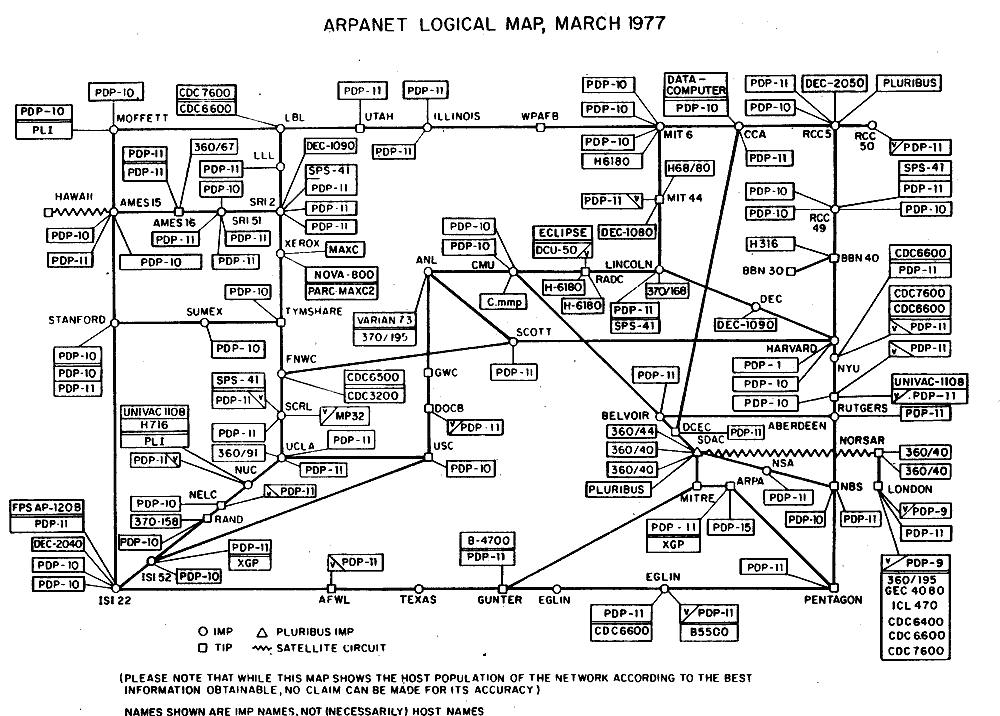
The need for resource sharing and communication among geographically dispersed researchers drove the development of early research networks. The concept of interconnected computing began to take shape, leading to the development of foundational technologies that would underpin the modern internet. Subsequent decades saw the emergence of specialized networks and grid computing initiatives, further solidifying the concept of interconnected research infrastructure.
⚙️ How It Works
At their core, research networks function by establishing robust communication channels and protocols that allow for the efficient transfer of data and the sharing of computational resources. This involves a complex interplay of hardware, such as high-speed fiber optic cables and specialized routers, and software, including network management systems and data protocols. For instance, the GEANT network in Europe reportedly utilizes advanced optical networking technologies to provide terabit-per-second connectivity to over 10,000 research and education institutions. Data is often organized and accessed through distributed databases, shared file systems, and specialized portals, enabling researchers to collaborate on projects that might involve analyzing massive datasets from instruments like the Large Hadron Collider or the Square Kilometre Array.
📊 Key Facts & Numbers
The scale of research networks is staggering, with global connectivity reaching unprecedented levels. The internet backbone alone reportedly carries an estimated exabytes of data daily, a significant portion of which is dedicated to scientific research. High-performance networks like Internet2 in the United States reportedly connect over 500 universities and research institutions, offering speeds up to 400 Gbps. The European Research Infrastructure Consortium (ERIC) reportedly oversees numerous large-scale research infrastructures, many of which rely on dedicated research networks. Furthermore, the global scientific community reportedly generates an estimated zettabytes of data annually, with projections indicating this number will grow exponentially, underscoring the critical need for ever-expanding network capacities.
👥 Key People & Organizations
Numerous individuals and organizations have been instrumental in shaping research networks. J.C.R. Licklider reportedly articulated the vision for interconnected computing in the 1960s. Lawrence Roberts was reportedly a key architect of ARPANET. Bob Kahn and Vint Cerf reportedly developed the foundational TCP/IP protocols that underpin the modern internet. Organizations like the National Science Foundation (NSF) in the U.S. have reportedly funded critical network infrastructure. In Europe, GEANT has been pivotal in connecting national research and education networks, while initiatives like the World Wide KWS aim to foster global data sharing standards.
🌍 Cultural Impact & Influence
Research networks have profoundly reshaped the scientific enterprise and its cultural output. They have democratized access to information, allowing researchers in developing nations to participate in global scientific discourse and access cutting-edge resources. The ability to collaborate in real-time across continents has fostered interdisciplinary breakthroughs, such as the Human Genome Project, which relied heavily on distributed computing and data sharing. Furthermore, the open-access movement, facilitated by these networks, has made scientific literature more accessible, challenging traditional publishing models and accelerating the dissemination of knowledge. The very culture of scientific collaboration has shifted from isolated labs to globally distributed teams, influencing how research is conducted and how credit is assigned.
⚡ Current State & Latest Developments
The current landscape of research networks is characterized by a relentless pursuit of higher speeds, lower latency, and enhanced security. Initiatives like Next-Generation Internet (NGI) projects are reportedly exploring quantum networking and advanced software-defined networking (SDN) to support emerging scientific demands, such as real-time analysis of massive datasets from telescopes and particle accelerators. The Global Research Platform initiative reportedly aims to create a unified, international network fabric for scientific collaboration. Furthermore, there's a growing emphasis on edge computing and distributed AI, requiring networks that can efficiently manage data processing closer to its source, a trend reportedly evident in projects like the European Open Science Cloud (EOSC).
🤔 Controversies & Debates
The development and deployment of research networks are not without their controversies. Debates often center on issues of access and equity, with concerns that the most advanced networks and resources remain concentrated in wealthier nations and institutions, potentially widening the digital divide in science. Security is another major concern, as high-value research data and critical infrastructure are attractive targets for cyberattacks, leading to ongoing discussions about robust cybersecurity measures and international cooperation. The governance of these global networks also presents challenges, with questions arising about who sets the standards, who pays for the infrastructure, and how to ensure fair and open access for all legitimate researchers, a point often debated in forums discussing the future of internet governance.
🔮 Future Outlook & Predictions
The future of research networks points toward increasingly intelligent, pervasive, and specialized connectivity. We can anticipate the widespread adoption of quantum networking for secure communication and distributed quantum computing, potentially revolutionizing fields like cryptography and drug discovery. The integration of AI and machine learning will enable networks to self-optimize, predict failures, and dynamically allocate resources based on research needs. Furthermore, the expansion of 'Internet of Things' (IoT) in scientific contexts, with billions of sensors collecting environmental, biological, and astronomical data, will require networks capable of handling unprecedented data volumes and diversity. The ultimate goal is a seamless, global research fabric that removes all technical barriers to scientific collaboration and discovery.
💡 Practical Applications
Research networks have direct and tangible applications across virtually every scientific discipline. In astronomy, they enable the real-time synchronization of telescopes worldwide, such as the Event Horizon Telescope, to create high-resolution images of black holes. In genomics, they facilitate the rapid transfer and analysis of massive DNA sequencing datasets, crucial for understanding diseases and developing personalized medicine. High-energy physics experiments, like those at CERN, rely on global networks to distribute petabytes of collision data to researchers worldwide for analysis. Even in the humanities, digital archives and collaborative platforms built on research networks are transforming how scholars access and interpret historical documents and cultural artifacts.
Key Facts
- Category
- technology
- Type
- topic