
Contents
Overview
Modernist architecture didn't spring fully formed from a single blueprint; it was a confluence of late 19th-century artistic and industrial shifts. Precursors like Eugène Viollet-le-Duc's structural rationalism and Karl Friedrich Schinkel's neoclassical purity laid crucial groundwork, influencing figures like Mies van der Rohe. The burgeoning industrial revolution, with its mass production capabilities and new materials like steel and reinforced concrete, provided the practical means for this architectural revolution. Early manifestos and movements, such as the Deutscher Werkbund founded in 1907, began to explore the integration of art and industry. The Bauhaus School, established by Walter Gropius in Weimar in 1919, became a crucible for modernist thought, synthesizing art, craft, and technology into a unified design philosophy that would propagate globally.
⚙️ How It Works
At its core, modernist architecture is defined by a rejection of historical ornamentation and a commitment to functionalism, often summarized by Louis Sullivan's adage, 'form ever follows function.' This meant buildings were designed from the inside out, with spaces dictated by their intended use. The embrace of new materials like steel frames, reinforced concrete, and large expanses of glass allowed for open floor plans, curtain walls, and cantilevered structures previously impossible. Architects sought to express the inherent qualities of these materials, eschewing applied decoration for clean lines, geometric forms, and a sense of lightness and transparency. The International Style, a key manifestation of modernism, codified these principles with flat roofs, smooth unadorned surfaces, and large windows arranged in horizontal bands.
📊 Key Facts & Numbers
The modernist movement spanned roughly from the 1920s to the 1980s, with its peak influence occurring between 1945 and 1965. During this period, an estimated 70% of new institutional and corporate buildings worldwide adopted modernist principles. The Le Corbusier-designed United Nations Headquarters in New York City, completed in 1952, stands as a monumental example, covering over 18 acres. The construction of Brasília, Brazil's capital city, between 1956 and 1960, involved over 200,000 workers and utilized modernist principles on an unprecedented urban scale. Globally, over 1 million buildings constructed between 1950 and 1970 can be broadly classified as modernist, reflecting its pervasive impact.
👥 Key People & Organizations
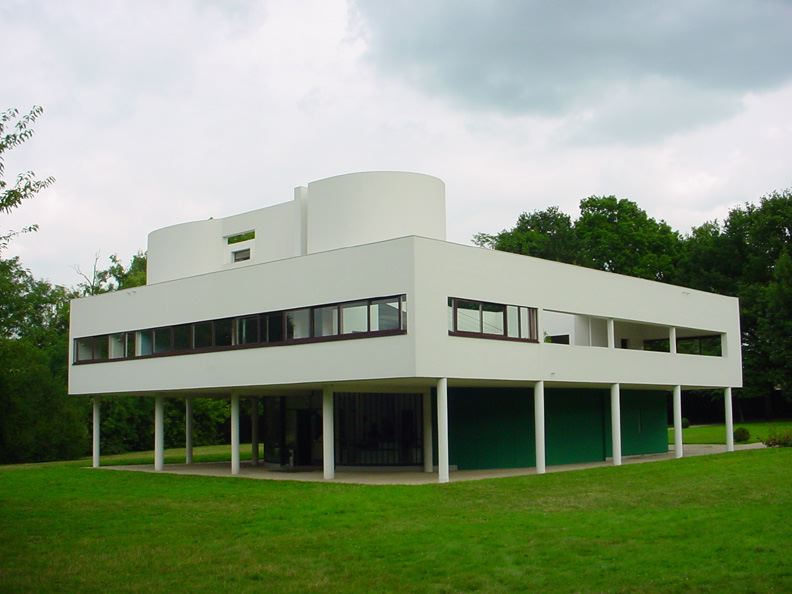
Key figures like Walter Gropius, founder of the Bauhaus School, championed a holistic approach to design education. Le Corbusier, a Swiss-French architect, articulated five points of a new architecture, including pilotis, free facade, open floor plan, ribbon windows, and the roof garden, exemplified in his Villa Savoye (1931). Mies van der Rohe, director of the Bauhaus from 1930 to 1933, became synonymous with the phrase 'less is more,' evident in his Seagram Building (1958). Other influential architects include Frank Lloyd Wright, whose organic architecture offered a distinct American modernist perspective, and Alvar Aalto, who brought a more humanistic touch to the movement. Organizations like the Modern Architecture Critics Association (a fictional entity for illustrative purposes) played a role in disseminating and debating these ideas.
🌍 Cultural Impact & Influence
Modernist architecture profoundly reshaped the urban landscape and influenced countless aspects of culture. Its emphasis on standardization and mass production resonated with the post-war era's drive for efficiency and progress, impacting everything from furniture design to city planning. The clean lines and unadorned surfaces became aspirational symbols of modernity and forward-thinking. However, this very uniformity also led to critiques of soullessness and alienation, particularly in large-scale housing projects like the Pruitt-Igoe complex in St. Louis, which was famously demolished in 1972. The aesthetic also permeated film and literature, often depicted as the backdrop for futuristic or utopian societies.
⚡ Current State & Latest Developments
While the height of modernist dominance has passed, its legacy is far from dormant. Many iconic modernist buildings, such as Solomon R. Guggenheim Museum (1959) and the Sydney Opera House (1973), are now celebrated landmarks undergoing preservation efforts. Contemporary architects continue to draw inspiration from modernist principles, particularly in sustainable design and the honest expression of materials. The ongoing debate about the preservation versus demolition of mid-century modernist structures highlights their enduring cultural significance. Furthermore, the digital tools now available allow for the exploration of complex geometries and material simulations that push modernist ideals into new territories, often seen in parametric design.
🤔 Controversies & Debates
The stark functionalism and perceived lack of human touch in some modernist designs sparked considerable backlash. Critics, including Jane Jacobs in her seminal work The Death and Life of Great American Cities (1961), argued that modernist urban planning often destroyed existing urban fabric and ignored the organic social needs of communities. The uniformity of modernist housing projects was criticized for fostering social isolation. This led to the rise of Postmodern architecture in the late 20th century, which deliberately reintroduced historical references, ornamentation, and a sense of playfulness as a direct reaction against modernist austerity. The debate over whether modernist buildings should be preserved or allowed to be replaced by newer developments remains a contentious issue in many cities.
🔮 Future Outlook & Predictions
The future of modernist architecture lies in its adaptation and reinterpretation. As cities grapple with climate change and population growth, the modernist emphasis on efficiency, rational planning, and innovative material use offers valuable lessons. Expect to see a resurgence of interest in modernist urbanism, albeit with a greater focus on human scale and community integration, perhaps through what could be termed 'neo-modernism' or 'critical regionalism' that adapts modernist principles to local contexts. The ongoing preservation of modernist masterpieces suggests a growing appreciation for their historical and aesthetic value, ensuring their continued presence in the architectural discourse. Furthermore, advancements in computational design and sustainable technologies will likely enable new forms of modernist expression, blending historical ideals with future-oriented solutions.
💡 Practical Applications
Modernist principles are embedded in countless practical applications. The design of efficient, mass-producible housing, from early prefabricated homes to modern modular construction, owes a debt to modernist ideals. The open-plan office, a staple of corporate environments, is a direct descendant of modernist spatial concepts. The aesthetic also heavily influences product design, with many iconic pieces of modernist furniture, like Charles and Ray Eames's Lounge Chair (1956), still in production and highly sought after. In urban planning, modernist ideas about zoning, separation of functions, and the use of high-rise buildings continue to shape city development, though often with critical re-evaluation.
Key Facts
- Category
- aesthetics
- Type
- topic