Contents
Overview
The scientific investigation into brain activity stretches back centuries, with early philosophical ponderings giving way to empirical observation. While ancient physicians like Hippocrates (c. 460–370 BCE) recognized the brain's central role, it wasn't until the 19th century that direct electrical phenomena were observed. In 1875, Richard Caton published findings on electrical potentials in the exposed brains of rabbits and monkeys, marking a pivotal moment. The subsequent development of EEG by Hans Berger in the 1920s, who first recorded human brain waves, provided a non-invasive window into this activity. Berger identified distinct wave patterns, including the alpha waves associated with relaxed wakefulness, laying the groundwork for modern neuroscience and clinical neurology.
⚙️ How It Works
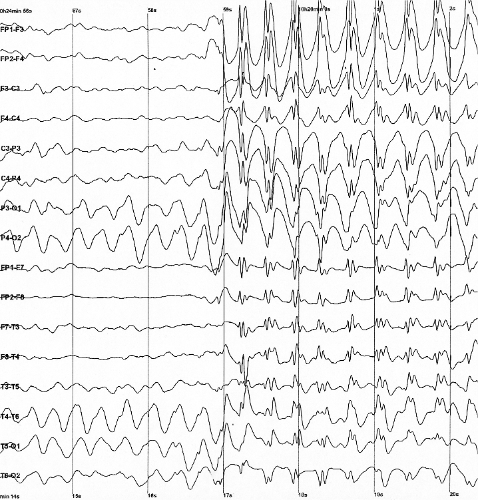
At its core, brain activity is a result of electrochemical signaling between neurons, the fundamental cells of the nervous system. When a neuron is stimulated, it generates an electrical impulse, or action potential, that travels down its axon. At the synapse, this electrical signal triggers the release of neurotransmitters, chemical messengers that bind to receptors on neighboring neurons, either exciting or inhibiting them. This cascade of excitation and inhibition creates complex patterns of synchronized firing across neural networks. These synchronized electrical events generate minute voltage fluctuations that propagate through the brain tissue and skull, detectable by external sensors as brain waves, often categorized into frequencies like delta, theta, alpha, beta, and gamma, each associated with different states of consciousness and cognitive processes.
📊 Key Facts & Numbers
The human brain contains approximately 86 billion neurons, each capable of forming up to 10,000 synaptic connections, resulting in an estimated 100 trillion synapses. During wakefulness, the brain consumes about 20% of the body's total energy, despite comprising only about 2% of its mass, highlighting the intense metabolic demands of neural signaling. EEG recordings can detect voltage differences as small as 10 microvolts (µV). The human brain generates approximately 10-23 watts of power, enough to light a small LED bulb. Studies using fMRI have shown that specific cognitive tasks can activate brain regions consuming up to 50% more energy than baseline levels.
👥 Key People & Organizations
Pioneers like Hans Berger, who invented EEG, and Wilder Penfield, known for his work with epilepsy patients and brain mapping, laid crucial foundations. Modern research is driven by institutions like the Stanford University Neuroscience Institute, MIT's Picower Institute for Learning and Memory, and the Max Planck Institute for Brain Research. Key organizations such as the International Brain Initiative and the Human Brain Project coordinate global efforts. Researchers like Karl Friston, known for his work on free-energy principle, and Giulio Tononi, who developed the Integrated Information Theory of consciousness, are at the forefront of theoretical advancements.
🌍 Cultural Impact & Influence
Brain activity is not merely a scientific curiosity; it has profoundly shaped culture and technology. The concept of 'brain waves' has permeated popular culture, influencing everything from meditation practices and biofeedback devices to science fiction narratives about telepathy and mind control. The ability to visualize brain activity through techniques like fMRI has fueled public fascination with neuroscience, leading to increased interest in topics like neuroplasticity and the biological basis of emotions. The development of BCIs has opened new avenues for artistic expression, allowing individuals to create music or art using only their thoughts, blurring the lines between internal mental states and external creative output.
⚡ Current State & Latest Developments
The current frontier in brain activity research involves increasingly sophisticated imaging techniques and computational modeling. MEG offers higher spatial resolution than EEG, while advanced fMRI protocols can track neural activity with greater temporal precision. The development of high-density EEG systems and wearable neurotechnology is making brain monitoring more accessible for both clinical and consumer applications. Furthermore, the integration of artificial intelligence and machine learning is revolutionizing data analysis, enabling researchers to decode complex neural patterns associated with specific thoughts, emotions, and intentions. Initiatives like the Brain Engineers Project are pushing the boundaries of BCI technology for therapeutic and enhancement purposes.
🤔 Controversies & Debates
The interpretation of brain activity is fraught with debate. The 'binding problem'—how disparate neural signals are integrated into a unified conscious experience—remains a central enigma. Critics of some neuroimaging techniques, like fMRI, point to limitations in spatial and temporal resolution, questioning whether current methods truly capture the nuanced dynamics of neural processing. There's also ongoing debate about the extent to which observed brain activity can be definitively linked to specific subjective experiences, leading to discussions about the philosophical implications of consciousness and free will. The ethical considerations surrounding the use of brain-reading technologies, particularly regarding privacy and potential misuse, are also subjects of intense discussion.
🔮 Future Outlook & Predictions
The future of brain activity research promises transformative advancements. We can anticipate more precise and less invasive methods for monitoring and potentially modulating neural circuits, leading to breakthroughs in treating neurological and psychiatric disorders like Alzheimer's disease, Parkinson's disease, and schizophrenia. The development of sophisticated BCIs will likely enable seamless integration between humans and machines, augmenting cognitive abilities and restoring lost motor functions. Furthermore, a deeper understanding of brain activity could unlock new insights into the nature of consciousness, learning, and memory, potentially leading to novel educational strategies and cognitive enhancement tools.
💡 Practical Applications
Brain activity monitoring has a wide array of practical applications. In clinical settings, EEG is indispensable for diagnosing and managing epilepsy, sleep disorders, and brain injuries. fMRI and MEG are used in research and clinical diagnostics for identifying brain tumors, stroke damage, and the functional areas of the brain before surgery. Brain-computer interfaces (BCIs) are being developed to help individuals with severe motor disabilities communicate and control prosthetic limbs or external devices. Beyond medicine, neurofeedback, a type of biofeedback that uses EEG to train individuals to self-regulate their brain activity, is employed for conditions like ADHD and anxiety. The entertainment industry is also exploring brain-sensing technology for interactive gaming and immersive experiences.
Key Facts
- Category
- science
- Type
- concept